The Jaguar! National Symbols, Free Expression, & Electoral Justice in Guyana
The Jaguar and Party Symbol at the Center of the WIN Party Symbol Controversy
When India emerged from its darkest democratic hour—the Emergency period of 1975–1977—a new political force was born. The Bharatiya Janata Party (BJP), seeking to restore national pride and democratic ideals, adopted the lotus, India’s national flower, as its symbol. The lotus, revered across cultural and religious traditions, symbolizes purity and resilience. “The lotus blooms in muddy waters,” Narendra Modi proclaimed in 2014. A statement that invokes hope and transformation. The lotus became more than a flower—it emerged as a declaration of national rebirth.
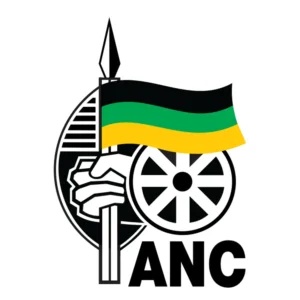
In a similarly profound moment of transformation, post-apartheid South Africa saw the African National Congress (ANC) adopt the spear and shield in 1991. These symbols, rooted in Zulu heritage, represented resistance, dignity, and cultural pride. Emerging from the shadows of apartheid, the ANC sought not only to govern but to heal a divided nation. The ANC reaffirmed the spear and shield, long part of its liberation-era insignia, as emblems of defense and self-determination. In a time of deep national reconstruction, they became powerful expressions of aspiration and unity.
Elements of national symbols are not only used as party symbols in India and South Africa. It is a global tradition. In moments of political reawakening or national crisis, national symbols take on greater meaning. Parties and citizens alike, cling to such emblems to express identity, forge solidarity, and articulate a vision for the future. These are not violations of national sanctity -they are affirmations of it.
Just as the BJP in India and the ANC in South Africa turned to national symbols to express civic renewal, Guyana today faces its own inflection point. Vast oil discoveries propel the country into the ranks of emerging petrostates. Widening ethnic contestation and social fragmentation also raise the stakes of political representation. It is in this context the jaguar, national symbols, free expression and electoral justice must be considered. Therefore, the WIN Party symbol controversy requires more than a passing glance.
Who Owns the Jaguar? The WIN Party Symbol Controversy
The jaguar, a storied emblem of Guyana’s strength and independence, offers WIN a chance to signal a break with politics-as-usual, and to channel aspirations for a united, forward-looking republic.
WIN initially indicated that the jaguar represents agility, power, and relentless commitment—qualities that resonate with the spirit of national revival.
A foundational principle of constitutional interpretation guides us here. Readers must interpret constitutional provisions harmoniously, not in conflict with one another. However, the Guyana Elections Commission (GECOM), chaired by retired Appeal Court Justice Claudette Singh, rejected the symbol. GECOM determined that the jaguar is protected under Article 7 of the Constitution because it appears on the Coat of Arms. This decision raises questions of legal interpretation, expressive freedom, the use of the jaguar and electoral justice in Guyana.
The jaguar, while depicted on the Coat of Arms, is not independently codified as a national symbol. There is no statute that prohibits use by the public. The Constitution refers to the Coat of Arms as a whole, not its constituent elements. To treat every individual part of a compilation like the Coat of Arms as a standalone protected symbol is a distortion of how legal symbols operate. The jaguar, like any symbol imbued with cultural meaning, is not the exclusive domain of the state. It belongs to the people. Its use in political messaging is a legitimate form of public expression.
Ironically, under pressure, WIN abandoned the jaguar and adopted the leopard as its symbol.
The Scope of Article 7 in the Context of the WIN Party Symbol Controversy
Article 7 of the Constitution of Guyana states:
“It is the duty of every citizen of Guyana, wherever he or she may be, and of every person in Guyana to respect the national flag, the coat of arms, the national anthem, the national pledge, and the Constitution of Guyana, and to treat them with due and proper solemnity on all occasions.”
Article 7 references the coat of arms but not its constituent parts. The law does not independently designate the jaguar as a national symbol by statute, even though it is an element of the Coat of Arms. In legal terms, the coat of arms is a compilation—a design composed of distinct elements. The WIN Party’s use of a stylized jaguar head is not a replication of the entire emblem but a selective reference, much like the lotus in India or the spear in South Africa. Absent explicit statutory prohibition, the use of such an element does not violate the Constitution.
Proper application of the law should lead to the conclusion that the jaguar is not a codified national symbol. Therefore, it is not one of the national symbols that Article 7 refers to.
Article 7 vs. Article 146: Balancing Respect for Symbols with Freedom of Political Expression
Even if the Constitution protects the jaguar, Article 7 imposes a duty on citizens to act respectfully, rather than restricting their right to expression. It emphasizes respect—not censorship. There is no language within the Article that prohibits symbolic use or political representation.
A foundational principle of constitutional interpretation guides us here. Readers must interpret constitutional provisions harmoniously, not in conflict with one another. Therefore, interpreters of Article 7 must not construe its call for respect for national symbols in a way that creates tension with Article 146, which guarantees freedom of expression.
When constitutional provisions appear to clash, courts must resolve such apparent contradictions in favor of coherence. To read Article 7 as restricting expressive conduct—particularly political speech—would subordinate a core democratic freedom to a vague standard of solemnity. Such an approach would be antithetical to the constitutional.
Party symbols are means by which political parties gain access to elections ballots in Guyana. Therefore, rejection could prevent a party from participation in elections. Its rejection therefore raises fundamental concerns about electoral justice.
Censorship or Constitutional Right? National Symbols and Political Expression
Because the WIN Party chose a symbol that constitutes political speech, the Constitution requires that it receive the highest level of protection. Article 146 grants strong protection to political speech and permits restrictions only when they are narrowly tailored to serve public order, security, morality, or health. The jaguar symbol does not fall into any of these exceptions.
This intersection of national identity and political expression has long been part of Guyana’s own democratic story. The dominant parties—the People’s Progressive Party (PPP) and the People’s National Congress (PNC)—chose their party colors as poignant political messaging.
When Guyana’s national flag was conceived, its designer incorporated the colors of the dominant parties —green for the land, red for zeal, and gold for wealth— to reflect the tenor of political messaging at the time. The Golden Arrowhead thus emerged as a tapestry of the country’s political and cultural symbolism, not in conflict with party identity, but reflecting it.
Moreover, GECOM has a history of accepting symbols drawn from national elements. The ROAR party previously used a jaguar symbol. The Citizenship Initiative used the Victoria lily—another national emblem—in the 2020 elections. Consider also the ANUG party’s symbol, which incorporates a stylized version of the national flag—another object referenced in Article 7. If the jaguar’s partial use violates Article 7, then so must any stylization of the flag. This inconsistency suggests selective application and undermines legal credibility. These precedents underscore the inconsistency of GECOM’s current position.
Elsewhere in Guyana, national symbols appear routinely in commercial speech, including merchandise and branding. These uses receive lower constitutional protection than political speech. Thus, prohibiting respectful political use while permitting commercial exploitation would be an indefensible inconsistency.
The Guyana Forward Movement Case
A similar issue has arisen with the Guyana Forward Movement. That party’s symbol features people lifting a stylized map of the country. GECOM has flagged it, claiming the depiction obscures parts of the map. The standard applied here again edges toward aesthetic policing rather than legal reasoning.
Global Comparisons: Legal Norms on National Symbol Use in Politics
The table below shows that around the world, national symbols are adopted by political parties as integral elements of democratic representation:
Country
Political Party
National Symbol or Element Used
India
Bharatiya Janata Party (BJP)
Lotus flower (India’s national flower)
South Africa
African National Congress (ANC)
Spear and shield (Zulu heritage)
Canada
Liberal Party of Canada
Maple leaf (Canada’s national leaf)
Poland
Law and Justice (PiS)
Stylized white eagle (from national coat of arms)
USA
Constitution Party
Bald eagle (United States national bird)
Russia
United Russia
Russian bear (national personification)
In these examples, political parties leverage national imagery to connect with voters and affirm cultural or constitutional values. None of these cases have resulted in constitutional prohibition. In fact, such usage has reinforced public trust and electoral engagement.
Conclusion: Law, Speech, and Belonging
Symbolic representation matters now more than ever. In a petrostate-in-the-making like Guyana—where oil wealth magnifies political stakes and ethnic tensions risk deepening divides—silencing political expression through overbroad interpretations of national symbolism is not just legally flawed; it is democratically dangerous.
The WIN Party symbol controversy is not a technicality—it is a constitutional crossroads. GECOM’s decision to bar a stylized jaguar on symbolic grounds undermines the very freedoms the Constitution exists to protect. No one should weaponize Article 7’s call for respect against the political participation that Article 146 enshrines.
Worse still, GECOM does not give parties whose symbols it rejects an opportunity to contest the decision before finalizing it. This lack of procedural fairness is especially alarming given that the decision-making power at GECOM lies in the hands of representatives from the two dominant political parties. Without safeguards, this structure risks enabling established forces to exclude and censor emerging challengers under the guise of constitutional interpretation.
National symbols belong to the people. They are not museum pieces—they are instruments of civic identity and political imagination. Denying their use in political messaging sends a chilling message: that only some voices, and some visions of nationhood, are welcome at the ballot.
The jaguar is not the property of the state. It is a living emblem of Guyana’s collective story—a symbol that, in the hands of the people, can roar with pride, possibility, and power.
If Guyana is serious about democratic renewal, then it must protect the right to speak, symbolize, and stand for something. Anything less is not electoral law—it is symbolic gatekeeping.
When India emerged from its darkest democratic hour—the Emergency period of 1975–1977—a new political force was born. The Bharatiya Janata Party (BJP), seeking to restore national pride and democratic ideals, adopted the lotus, India’s national flower, as its symbol. The lotus, revered across cultural and religious traditions, symbolizes purity and resilience. “The lotus blooms in […]
A new magnet for commerce and investment opportunities. With one of the world’s fastest growing economies, the Caribbean region is experiencing significant transformation in commerce and investment. This makes quality legal services and lawyers who understand cross-border issues, pivotal to the rapid advancement of the Caribbean region. Follow the issues as they evolve, here.